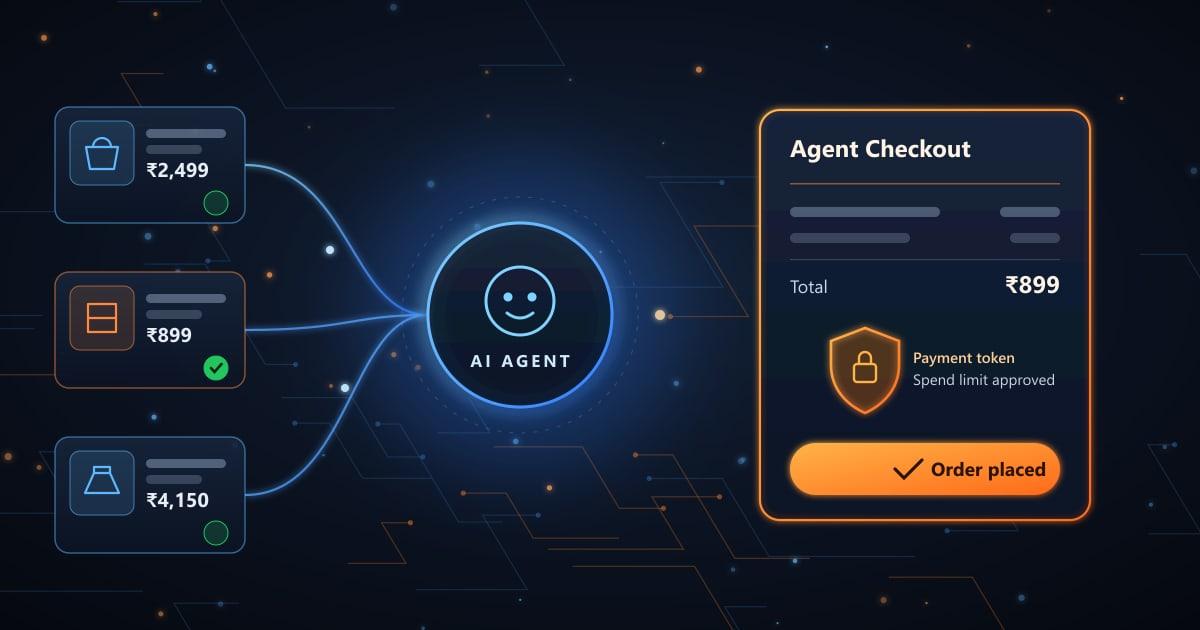
Your next customer may never see your homepage. This festive season, more shoppers are typing a request like "find me a cotton kurta set under ₹1,500 that can arrive by Friday" into an AI assistant and letting it do the rest. The assistant searches, compares sellers, picks one and pays.
This is agentic commerce: AI agents that discover, evaluate and buy products for a person, within limits that person has approved. For Indian D2C brands and e-commerce stores, it changes what "being visible" and "converting" mean. This guide explains how agentic commerce works in 2026, the payment rails behind it, and a practical checklist to get your store ready.
What Is Agentic Commerce?
Agentic commerce is shopping where an AI agent completes some or all of the buying journey for a customer. The customer states a goal and a budget. The agent handles discovery, comparison, checkout and sometimes post-purchase tasks like tracking or returns.
It is different from the chatbots and recommendation widgets most stores already run:
| Traditional e-commerce | Conversational commerce | Agentic commerce | |
|---|---|---|---|
| Who browses | The customer | The customer, with chat help | The AI agent |
| Who decides | The customer | The customer | The agent, within customer rules |
| Who pays | The customer at your checkout | The customer at your checkout | The agent, using a scoped payment token |
| What wins | Good design and ads | Fast, helpful answers | Accurate, machine-readable data |
The last row matters most. An agent does not care about your hero banner. It cares whether your price, stock, delivery date and return policy are clear, current and easy to read by software.
Why Agentic Commerce Is Taking Off in 2026
Shopping agents have been demoed for years. Three things changed that made them practical.
1. Checkout protocols built for agents
Until recently an agent had to "pretend" to be a human clicking through a checkout page, which broke easily. Now there are open protocols designed for agents:
- Agentic Commerce Protocol (ACP), released by OpenAI and Stripe in 2025, lets an agent pass an order and a limited payment credential to a merchant without seeing the customer's full card details.
- Agent Payments Protocol (AP2) from Google defines signed "mandates" that record exactly what the customer authorised the agent to buy.
- Universal Commerce Protocol (UCP), introduced by Google with retail and platform partners in early 2026, standardises how agents discover products and complete checkout across stores.
2. Payment networks issuing agent credentials
Visa (Intelligent Commerce) and Mastercard (Agent Pay) both launched programmes that issue tokenised credentials to verified AI agents. Each token can carry limits such as a spend cap, a merchant category or an expiry time. In India, NPCI announced pilots in 2025 for UPI payments made through AI assistants, which points to agent payments arriving on the rail most Indians already use.
3. Models that can finish multi-step tasks
Current AI models can plan, call tools, check results and recover from errors across many steps. That makes "find, compare, buy, confirm" a task they can complete reliably, not just a demo.
How an AI Shopping Agent Completes a Purchase
Here is the typical flow when a customer asks an assistant to buy something:
[ Customer request ]  "Running shoes, size 9, under ₹4,000, delivered by Saturday"
        │
        ▼
[ 1. Intent ]        Agent extracts constraints: category, size, budget, deadline
        │
        ▼
[ 2. Discovery ]     Agent queries product feeds, merchant APIs and search
        │
        ▼
[ 3. Comparison ]    Ranks options on price, stock, delivery date, reviews, returns
        │
        ▼
[ 4. Approval ]      Customer confirms, or a pre-set mandate allows auto-purchase
        │
        ▼
[ 5. Payment ]       Scoped token (spend limit, single merchant) sent via ACP / AP2 / UCP
        │
        ▼
[ 6. Fulfilment ]    Merchant confirms order; agent tracks delivery and handles returns
Notice where your store appears: in steps 2, 3 and 6. If your data is missing or wrong at step 2, you are never considered. If your delivery promise is vague at step 3, a competitor with a clear date wins.
What This Means for Indian D2C and E-commerce Brands
- Your product data becomes your storefront. Titles, attributes, sizes, GTINs and images need to be complete, because the agent compares them line by line.
- Price and stock accuracy is a ranking factor. An agent that hits an out-of-stock item or a price mismatch at checkout will learn to avoid your store.
- Policies are part of the product. Return windows, COD availability and delivery times are often the deciding factor between two similar items.
- Brand loyalty works differently. Customers can tell an agent "prefer brands I have bought before". Repeat buyers and clean order history become more valuable.
- Marketplaces are not the only path. Agent protocols let independent stores on Shopify, WooCommerce or custom stacks compete with large marketplaces on data quality rather than ad spend.
How to Make Your Store Agent-Ready: A 6-Step Checklist
1. Publish complete structured product data
Add schema.org Product and Offer markup to every product page and keep your product feed (Google Merchant Center, Meta catalogue) in sync. Include GTIN or SKU, brand, price, currency, availability and delivery details.
{
  "@context": "https://schema.org",
  "@type": "Product",
  "name": "Men's Cotton Kurta Set - Indigo",
  "sku": "KRT-IND-042",
  "brand": { "@type": "Brand", "name": "YourBrand" },
  "image": "https://yourstore.in/images/krt-ind-042.jpg",
  "offers": {
    "@type": "Offer",
    "price": "1299",
    "priceCurrency": "INR",
    "availability": "https://schema.org/InStock",
    "hasMerchantReturnPolicy": {
      "@type": "MerchantReturnPolicy",
      "merchantReturnDays": 7,
      "returnPolicyCategory": "https://schema.org/MerchantReturnFiniteReturnWindow"
    }
  }
}
2. Expose real-time price and inventory through an API
Feeds that refresh once a day are too slow during a sale. Give agents (and the platforms they use) an API or frequently updated feed for live stock and price, so the agent never sells something you cannot ship.
3. Write policies that machines can read
Put return, exchange, shipping and COD rules on one clear page, use plain numbers ("7-day returns", "ships in 2 business days") and mark them up with structured data. Avoid burying key terms in long paragraphs or images.
4. Support agent-friendly checkout
Check whether your platform or payment gateway supports ACP, UCP or agent tokens. Shopify, Stripe and several Indian gateways are adding these options. At minimum, offer guest checkout and avoid steps that only a human can pass, such as forced account creation.
5. Review your bot rules
Many stores block all bots at the CDN or in robots.txt to stop scrapers. That can also block AI assistants that are trying to send you buyers. Audit your bot rules and allow the user agents of assistants you want to sell through, while still rate-limiting abusive traffic.
6. Run your own AI sales agent
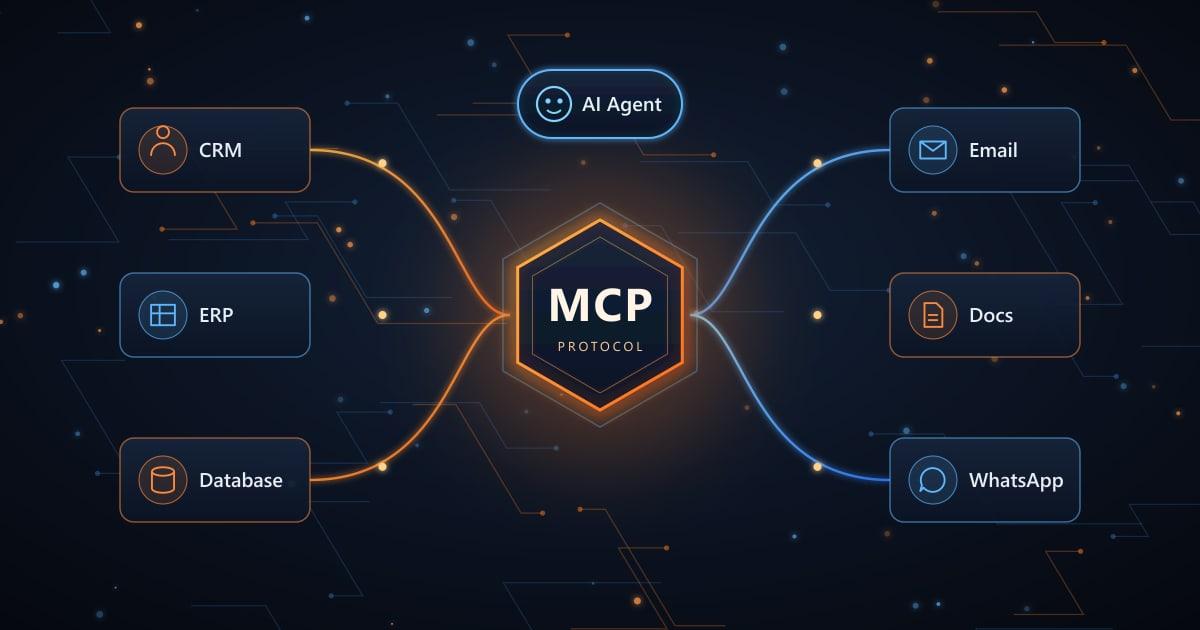
Agentic commerce is not only about third-party assistants. You can deploy your own agent on WhatsApp, on your website or over the phone that answers product questions, checks stock and creates orders. Read our guides on WhatsApp Business API and CRM integration and AI voice agents for how this works in practice.
Risks and How to Manage Them
Letting software spend money brings new problems. Plan for them from day one:
- Wrong orders. Agents can misread size charts or variants. Clear variant data and an easy cancellation window reduce disputes.
- Fraud and fake agents. Accept agent payments only through verified protocols and tokenised credentials, never through raw card details passed by unknown bots.
- Returns and liability. Decide in advance how you treat a return when the customer says "the agent bought the wrong thing". Mandate records from AP2-style protocols help settle these cases.
- Data privacy. Orders placed through agents still involve personal data. Handle it in line with India's Digital Personal Data Protection (DPDP) Act, and share only what fulfilment needs.
How to Measure Agentic Commerce Traffic
You cannot improve what you do not track. Start with:
- Referral sources from AI assistants (for example
chatgpt.com,perplexity.ai,gemini.google.com) in your analytics. - Orders by channel, tagging orders that arrive through agent protocols separately.
- Feed health: disapproved items, price mismatches and out-of-stock rates in your merchant feeds.
- Agent conversion rate: agent sessions that end in an order, compared with human sessions.
Frequently Asked Questions
What is agentic commerce in simple terms?
Agentic commerce is when an AI agent shops for a person. The person sets the goal and limits, and the agent finds products, compares them and completes the purchase.
Is it safe to let an AI agent make payments?
It is safer than it sounds when proper protocols are used. Agents receive tokenised credentials with spend limits and merchant restrictions instead of full card details, and many flows still ask the customer to confirm before paying.
How is agentic commerce different from conversational commerce?
In conversational commerce, a chatbot helps a customer who still makes the decision and pays. In agentic commerce, the agent can make the decision and pay, within rules the customer has set.
Do small businesses need to prepare now?
Yes, and the first steps are cheap. Clean product data, structured markup and clear policies help with Google Search, marketplaces and AI agents at the same time.
Get Your Store Ready for AI Shopping Agents
Agentic commerce rewards the stores that are easiest for software to understand and trust. The work is practical: fix your product data, open up live inventory, clarify policies and pick checkout tools that support agents.
At Alaknanda Infoplus, we build e-commerce platforms, product data pipelines and AI agents that help Indian brands sell through every channel, including AI assistants.
👉 Want to know how agent-ready your store is? Book a Demo with our team for a free review of your product data and checkout.